2026-11-27 ·
Handling Yard Waste After Spring Storms In The Augusta Area
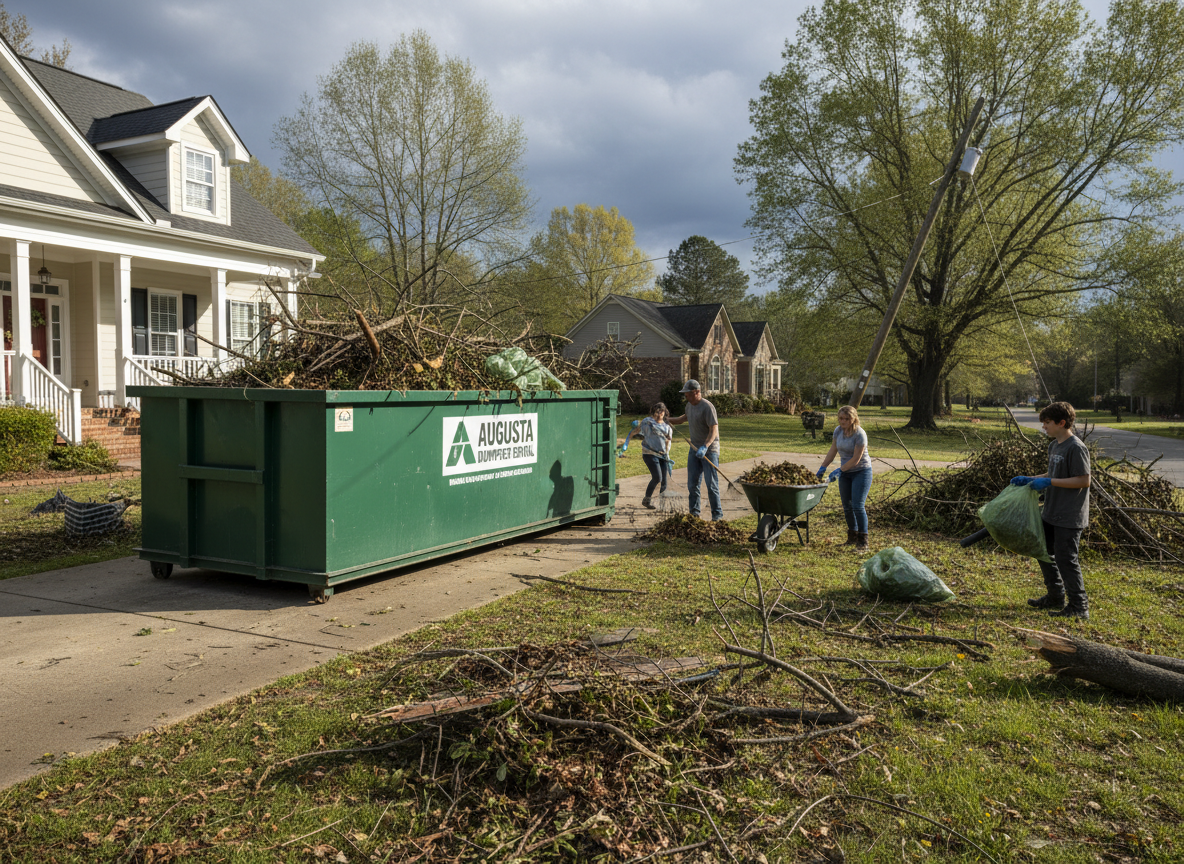
After spring storms hit the Augusta area, the most effective way to handle yard waste from properties in Summerville, Hillcrest, or Lake Aumond is to sort materials on site then load them into a 10-20 yard container for removal within a few days. Richmond County's mild winters followed by sudden heavy rains create saturated soil that makes large limbs and root balls heavier and harder to move, while hot summer follow-up weather speeds decomposition and attracts pests if waste sits too long.
Assessing Storm Damage Across Augusta Neighborhoods
Yards in older sections of Summerville and Turpin Hill often feature mature oaks and pines whose limbs break during the gusty fronts that roll through Richmond County each spring. Walk the property line first and separate fallen branches from uprooted shrubs or fence sections, noting how clay-heavy soil in Wheeless Road areas holds water and turns soft under repeated foot traffic or equipment. In Hillcrest and Lake Aumond, newer homes with smaller lots generate less volume but tighter driveways require careful measurement before any container arrives. Downtown Augusta properties near the Riverwalk Augusta face additional constraints from narrow streets and limited parking, so measure twice and stage piles near the curb only after confirming access. Phinizy Swamp Nature Park borders some eastern edges of town where extra moisture from the swamp keeps debris wet longer, increasing weight per cubic yard compared with drier lots in Martinez or Gracewood.
Sorting Yard Waste for Efficient Removal
Separate woody material from leafy debris and any mixed household trash before loading begins, because mixed loads often require extra handling at local transfer stations. Stack limbs longer than four feet flat to maximize space inside the container, and keep root balls separate if they exceed 50 pounds each. In Richmond Hill neighborhoods, residents frequently encounter pine straw mats that hold moisture; shaking these out reduces overall weight and prevents the container from exceeding typical load limits. Avoid placing treated lumber, painted fence pieces, or any construction scraps with the yard waste, as those items belong in a separate stream. Once sorted, cover the piles with a tarp during the next expected rain to keep additional water weight from accumulating before pickup.
Selecting Container Size and Timing for Local Conditions
Most single-family lots in Old Town or Richmond Hill need a 10-yard or 15-yard container for typical spring cleanup, while larger properties near Augusta National Golf Club or along the edges of Phinizy Swamp Nature Park may require a 20-yard unit when multiple trees come down. Schedule delivery for the morning after the storm passes so crews can work in daylight before afternoon heat builds in the humid subtropical climate. Place the container on a driveway or stable gravel pad rather than soft grass, especially in areas like Wheeless Road where red clay turns slick. If access is tight in Summerville alleys, request a smaller footprint unit and plan for two trips instead of one oversized load. Residents in nearby Martinez and Gracewood often share driveways, so coordinate timing with neighbors to avoid blocking morning traffic.
Local Placement and Follow-Up Steps
Check sight lines and overhead wires before final placement, particularly on streets near James Brown Arena or the Augusta Museum of History where pedestrian traffic stays steady. Once the container is loaded, call for pickup within the rental window to prevent overflow or additional fees from extended stays. In Richmond County, spring cleanup often coincides with scheduled bulk collection routes, so confirm whether your neighborhood allows curb-side staging on collection day. After removal, rake remaining pine straw and small twigs into a compost pile or bagged format for regular trash pickup. Properties in Downtown Augusta and Summerville benefit from repeating this process after each major front, because the combination of heat and humidity accelerates mold growth on any leftover debris left on the ground.